
Imagine a world in which precise sterility or cure is achieved by surgical instruments, lab glassware and even aerospace materials. With the use of different types of autoclave technology, the world still exists today. These pressure vessels remove pathogens or change materials by using saturated steam under regulated heat.
The demand for sterilization equipment in hospitals and laboratories is driving the global sterilization equipment markets, which presently reach over $8 billion yearly. Every design, from large industrial chambers to little dental units, has a specific function. Knowing these devices enables you to select the best sterilization or curing option.
What Are the Main Types of Autoclaves Available?
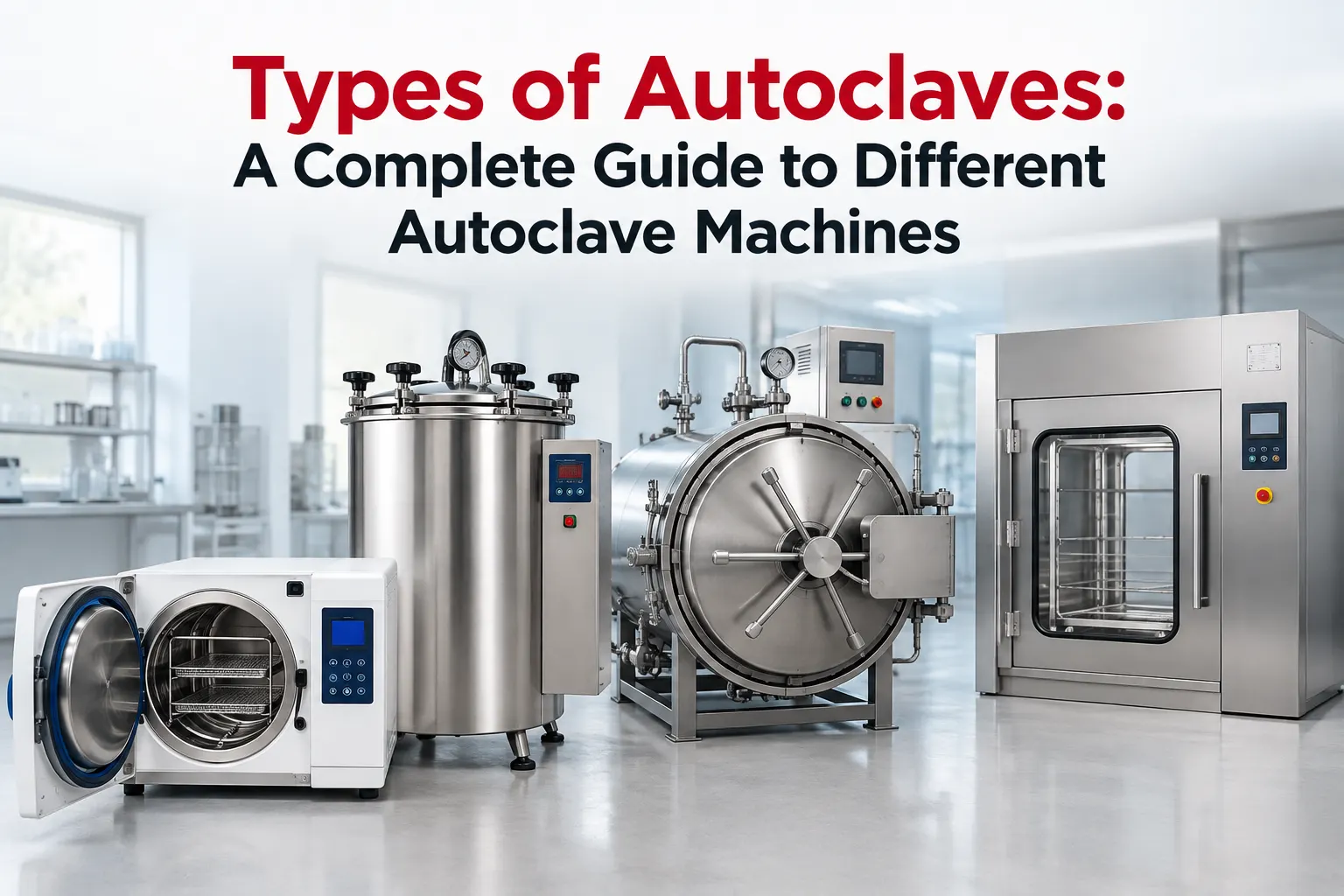
The sterilizing method, capacity and design of autoclaves vary. Benchtop, vertical, horizontal and pass-through units are the primary classifications. Each fulfills specific operational requirements in various sectors.
- Benchtop autoclaves are suitable for small labs and clinics.
- Higher capacity and a smaller footprint are provided by vertical autoclave machine.
- Horizontal autoclaves handle large loads in hospitals and industries.
- Pass-through autoclaves efficiently divide the clean and dirty zones.
According to recent research, the dentistry and veterinary sectors are dominated by benchtop units. For cost-effectiveness, vertical models are favored in Indian labs. High-volume hospital sterilizing workflows are supported by horizontal systems. Biosafety level 3 and level 4 containment regulations are satisfied by pass-through designs.
Selecting among types of autoclaves depends on your load type and space. Explore how this helps your business optimize sterilization workflows.
How Do Gravity Displacement and Pre-Vacuum Autoclaves Differ?
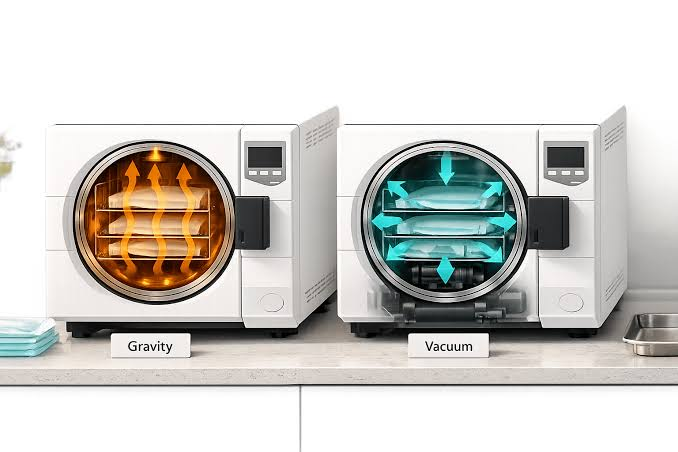
Sterilization cycles define performance across types of autoclaves. Gravity displacement and pre-vacuum are two core methods. Each impacts cycle time, load compatibility and validation requirements.
- Gravity displacement uses steam to push air out naturally.
- Pre-vacuum removes air actively before steam injection.
- Gravity units suit solid, unwrapped instruments only.
- Pre-vacuum units handle wrapped, porous and hollow loads.
Pre-vacuum cycles achieve faster, deeper steam penetration. They are essential for Class B sterilizers under EN 13060 standards. Gravity models are simpler and cheaper but limited in application. Pre-vacuum autoclaves are currently used in more than 70% of dental offices to ensure compliance.
Knowing these distinctions can help you choose the appropriate autoclave kinds. See how this improves your sterilization’s dependability and safety.
Which Types of Autoclaves Are Best for Laboratories?
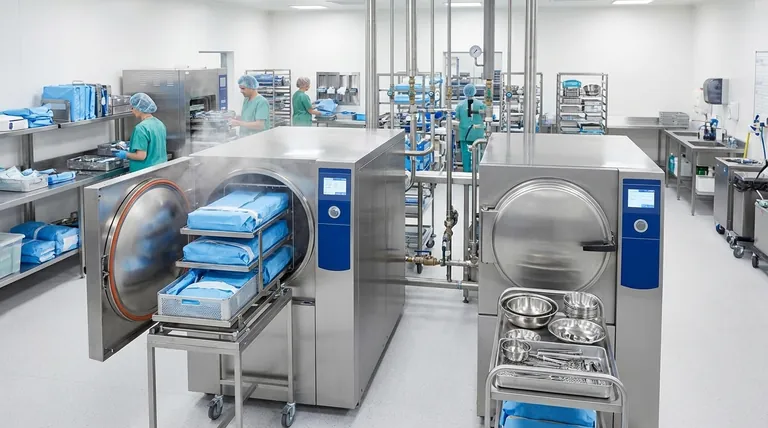
Certain autoclave types are chosen based on the needs of labs and clinics. The optimal choice is shaped by space and load type. Benchtop and vertical units lead in these settings.
- Benchtop autoclaves serve dental offices and small research labs.
- Vertical autoclaves support microbiology and pathology workflows.
- Class B benchtop models handle wrapped instruments safely.
- Vertical steam sterilizers process media, glassware and bio-waste.
The vertical types of autoclaves and digital controls and their units feature over-pressure protection and energy-efficient heating. Labs in India favor these for durability and precision. Selecting the appropriate autoclave types increases lab compliance and production. Find out how this improves your operational effectiveness right now.
What Safety Features Should Autoclave Machines Have?
For all kinds of autoclaves, safety is a must. To protect users, modern devices have numerous interlocks and alerts. These characteristics guarantee uniform sterilizing and avoid mishaps.
- Overheating or pressure spikes trigger the automatic shut-off.
- Leak-proof SS chambers maintain hygiene and structural integrity.
- Digital displays show real-time temperature and pressure data.
- Emergency release valves allow safe pressure venting if needed.
The vertical autoclaves integrate all these safety mechanisms. They meet global standards for medical and Food Processing Machinery. Operator training remains essential despite built-in protections.
Prioritizing safety in types of autoclaves reduces risk and downtime. Learn how this safeguards your team and equipment effectively.
How Do Industrial Autoclaves Compare to Medical Sterilizers?
The size, pressure and function of industrial and medical autoclaves are different. Rubber is frequently vulcanized or composites are cured in industrial facilities. The goal of medical sterilizers is to eradicate microorganisms from instruments.
| Feature / Parameter | Industrial Autoclaves | Medical Sterilizers |
| Operating Pressure | 0.3–2.0 MPa | 0.1–0.2 MPa |
| Operating Temperature | 150–200°C | 121–134°C |
| Common Design | Horizontal | Benchtop or Vertical |
| Primary Setting | Large-scale industrial applications | Clinical settings |
Aerospace and automobile manufacturing are supported by composite curing autoclaves. Rubber vulcanization units are used by manufacturers of tires and seals. According to ISO 17665, medical autoclaves must certify biological kill cycles.
Matching types of autoclaves to your industry ensures performance and compliance. See how this alignment drives better outcomes for your operations.
Conclusion
Picking the right type of autoclave changes everything for your facility. Safety improves while costs drop over time. Your team gains confidence with reliable sterilization cycles. Patients trust your clinic more when instruments stay germ-free. Labs produce cleaner results without contamination risks. Factories cure materials faster with steady heat control.
The top company builds vertical units that last for years. Their designs fit Indian workflows perfectly. You save power and space without losing performance. Start now by selecting the appropriate machine type for your needs. Make a wise decision that your future self will appreciate.
Also Read: Fruit Pulp Processing: Equipment, Process & Applications
FAQs
1. Which Kind of Autoclave is Most Frequently Used?
Ans: Autoclaves of the pass-through and horizontal varieties are primarily used in hospitals. Every day, these devices process a lot of wrapped surgical trays. Class B pre-vacuum cycles ensure that porous loads are completely and securely sterilized.
2. Is It Possible to Sterilize Wrapped Devices Using Benchtop Autoclaves?
Ans: Wrapped goods can only be safely sterilized using Class B benchtop autoclaves. Only solid, unwrapped tools are compatible with Class N models. Before making a purchase for a medical setting, always make sure the sterilization class is right.
3. What is the Average Duration of an Autoclave Cycle?
Ans: Types of autoclave and sizes have an impact on cycle times. Gravity cycles typically last thirty to forty-five minutes. Pre-vacuum cycles take 15 to 25 minutes to complete, plus drying time.
4. What is the Difference Between Vertical and Horizontal Autoclaves?
Ans: Vertical autoclaves have a top-loading design and suit smaller operations, while horizontal autoclaves offer higher capacity for large-scale sterilization.
5. Can Autoclaves Be Used for Industrial Applications?
Ans: Yes, industrial autoclaves are used for applications such as material curing, rubber vulcanization, composite processing and other heat-and-pressure processes.