
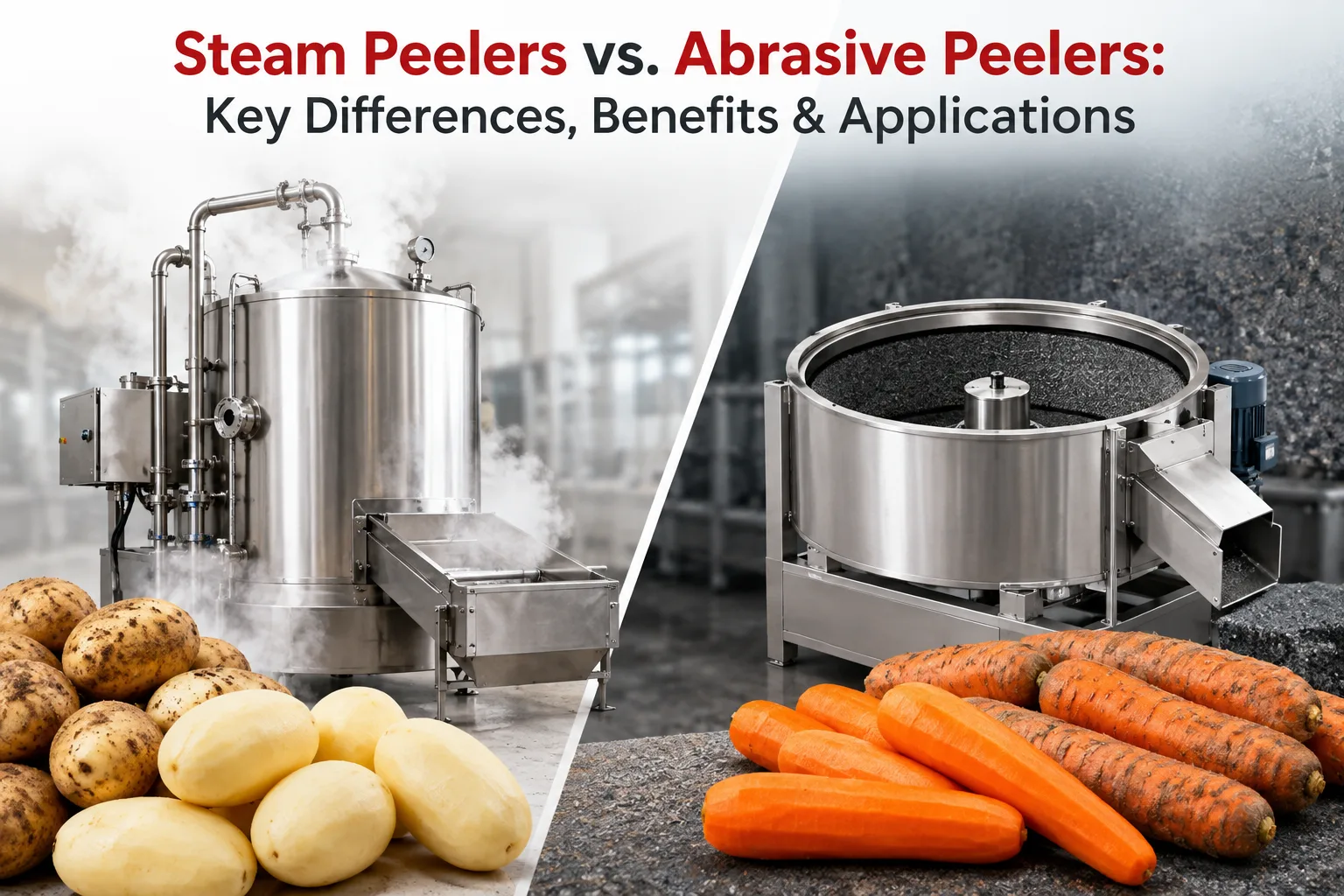
The choice of peeling technique can have an impact on labor requirements, operating costs, final product quality and overall production efficiency. Vegetable peels are loosened by steam systems using regulated heat. Skins are removed by abrasive processes using friction. According to the Food and Agriculture Organization, the global loss rate for fruits and vegetables is 25.4%.
Understanding Steam Peelers vs. Abrasive Peelers helps manufacturers assess yield, maintenance needs, hygiene standards and infrastructure requirements before investing. A clear comparison supports smarter planning while protecting valuable raw materials. In addition to safeguarding raw materials and enhancing uniformity across each production batch, a clear comparison facilitates more intelligent planning.
How Steam and Abrasive Peelers Work?
High-pressure steam is used in steam peeling to release skin in a matter of seconds. A brief steam treatment separates the edible flesh and the outer layer. The softened skin is subsequently removed using brushes, sprays, or mechanical action. Rough rollers, belts, or revolving surfaces are used in abrasive peeling. These surfaces brush on the product until the skin wears away.
The loose peel is often removed from the machine using water. The outcomes of the two approaches differ. A thinner layer of skin is often removed via steam peeling. Products with deep eyes, irregular forms, or size variations may have excess flesh removed by abrasive peeling. Important operational variations include:
- Boilers, pressure controls and appropriate steam infrastructure are necessary for steam systems.
- Mechanical motors and simpler water connections are typically required for abrasive systems.
- With automated controls, steam peeling facilitates large-scale production.
- Smaller businesses looking for a cheaper initial investment can benefit from abrasive peeling.
- A smoother surface for cutting or additional processing can be provided by steam systems.
Steam Peelers: Benefits and Applications
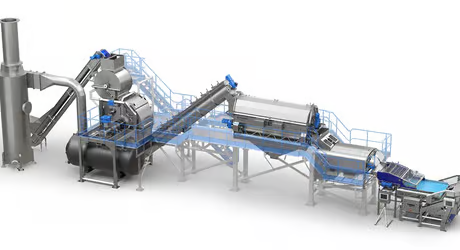
When product recovery is crucial, steam peelers come in handy. Instead of vigorously grinding the edible part, the procedure focuses on the skin. This can decrease the amount of pruning required after peeling and increase the useful yield.
A neat and consistent finish is further supported by steam peeling. Manufacturers who produce frozen fries, chips, purees and ready-to-eat items benefit from this advantage. Significant advantages consist of:
- When steam pressure and exposure time are properly regulated, meat loss is reduced.
- Appropriate operation for tomatoes, potatoes, carrots, beets and similar products.
- Improved surface quality for packing, freezing, drying and cutting.
- Simple interconnection with equipment for downstream processing and washing.
Under ideal circumstances, steam peeling losses are often reported by industry standards to be between 5 and 10%. Depending on crop quality and machine settings, abrasive systems may lose between 10% and 20%. Variety, form, skin thickness, calibration and operator control all affect actual outcomes.
The main limitation is infrastructure. Fruit and Vegetable Steam Peeler Machine need higher capital investment, trained operators and regular inspection of pressure-related components. Discover how controlled steam processing can improve yield and consistency.
Abrasive Peelers: Benefits and Applications
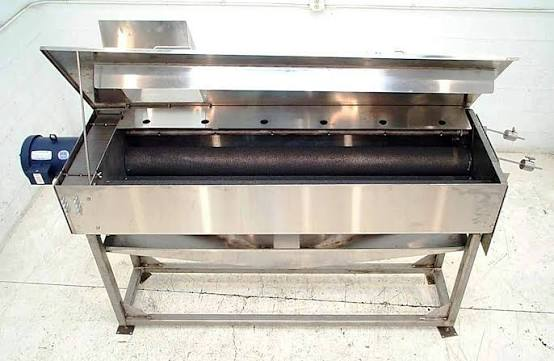
Abrasive peelers are still extensively used because they are practical, affordable and reasonably simple to use. They do not require a boiler or pressure vessel. For small and medium-sized processing facilities, this facilitates installation.
Potatoes, carrots, beets, onions and other firm root crops are excellent candidates for these devices. When production volumes are moderate, they are very helpful. They can also support facilities that process multiple goods on various schedules. Abrasive peeling has a number of benefits:
- Lower equipment cost compared with many steam systems.
- Straightforward operation and maintenance.
- Smaller infrastructure requirements.
- Flexible use across selected root crops.
- Easy access to mechanical parts during servicing.
- Suitable performance for moderate production capacity.
However, friction can remove edible tissue along with the skin. Losses may increase when vegetables have irregular shapes, deep eyes, soft areas or inconsistent sizes. Excessive peeling can also affect product appearance. Review your daily volume, raw material variation and acceptable yield loss before selecting this method.
Steam Peelers vs. Abrasive Peelers: Cost and Performance
The Steam Peelers vs. Abrasive Peelers decision should focus on total operating value. The entire financial impact is not displayed by the purchase price alone. Long-term expenses are further influenced by yield loss, labor, energy, water and downtime. Steam systems generally require a greater initial investment. They may need boilers, pressure controls, steam piping, safety equipment and specialised installation.
Yet higher usable yield can help recover that investment over time. Abrasive peelers usually cost less at the beginning. Their mechanical design can simplify maintenance and reduce installation demands. Still, higher flesh loss may become expensive when raw materials are costly or production volumes are large. Consider these practical factors:
- Choose steam when high throughput and maximum product recovery are priorities.
- Choose abrasive equipment when capital limitations are significant.
- Compare energy consumption across the complete processing line.
- Include water treatment expenses in the abrasive system calculation.
- Measure peel loss through production trials before finalising equipment.
- Check spare-part access, servicing needs and operator training requirements.
Some industry sources place abrasive capacity near 1-8 tonnes per hour. Steam systems can reach considerably higher capacities in industrial configurations. These figures vary by machine design, crop type and operating conditions.
Conclusion
The choice between peeling technologies depends on your products, processing volume, budget, and expected yield. Steam systems support automated high-capacity operations with controlled peeling. Abrasive systems provide practical performance with simpler installation and maintenance.
Reviewing Steam Peelers vs. Abrasive Peelers helps businesses identify the most suitable solution for their production goals. Product trials, operating measurements and lifecycle costs should guide the final decision before equipment installation or processing-line expansion. Explore the right peeling solution for your processing needs today.
Also Read: Types of Autoclaves: A Complete Guide to Different Autoclave Machines
FAQs
Q1. Which Peeler is Better: Steam or Abrasive Peeling?
Ans: Neither method is superior. Steam peelers are ideal for high-volume activities that require consistent outcomes and improved yield. Abrasive peelers suit smaller facilities seeking lower installation costs. Product trials should guide the final selection.
Q2. Do Steam Peelers Reduce Food Waste?
Ans: Steam peelers may reduce food waste by loosening skins more selectively. This limits edible flesh removal. Actual losses depend on pressure, treatment time, crop quality, machine settings and effective post-peeling separation.
Q3. Are Abrasive Peelers Suitable for Industrial Use?
Ans: Yes, abrasive peelers suit many industrial operations processing potatoes, carrots, beets and onions. They work best with moderate volumes. Proper roller maintenance helps control flesh loss while maintaining consistent peeling performance.
Q4. Which products can be processed with steam peelers?
Ans: Steam peelers are commonly used for potatoes, tomatoes, carrots, beets and other vegetables where controlled peeling and high product recovery are important.
Q5. What factors should be considered when choosing a peeler?
Ans: Consider product type, processing capacity, expected yield, peel loss, infrastructure, operating costs, maintenance requirements and available budget.