
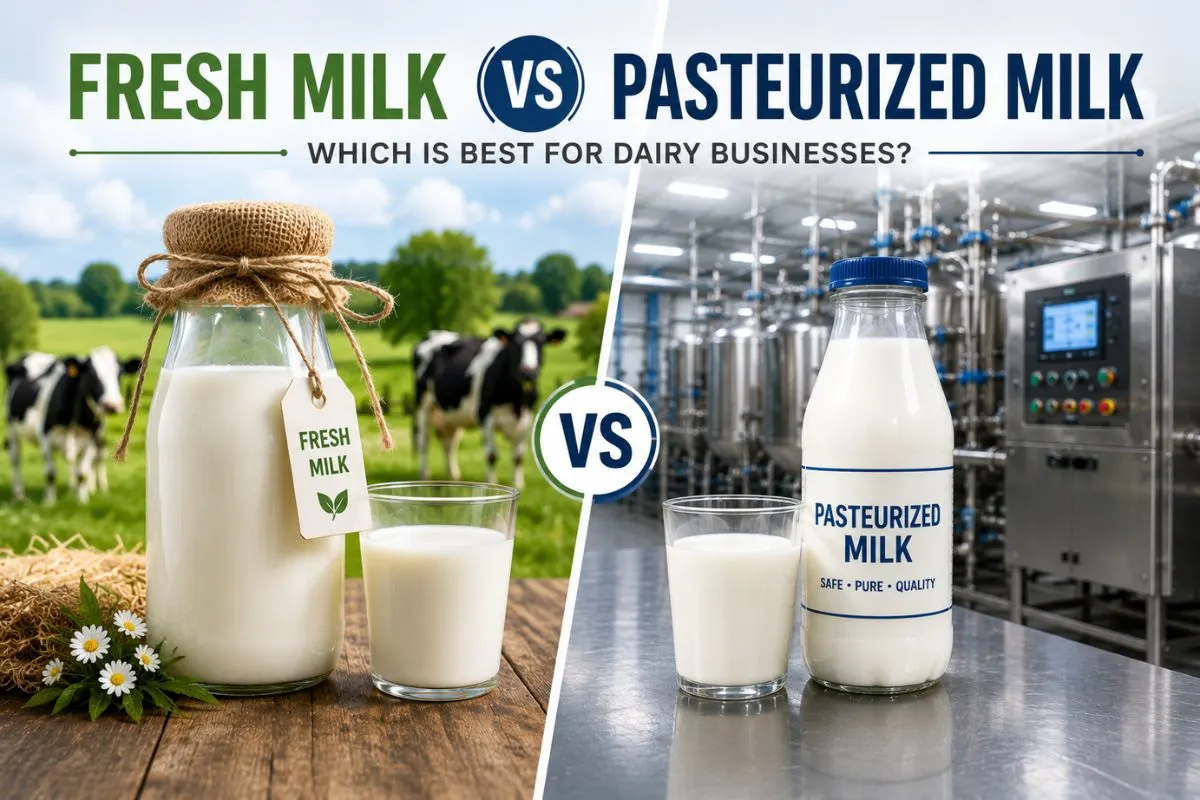
The debate around pasteurized milk vs fresh milk is growing across India’s dairy industry. Dairy brands, milk processors, and entrepreneurs want safer production and better shelf life. At the same time, consumers demand natural taste and nutritional value.
For dairy businesses the decision to use pasteurized milk is really important. These days dairy companies use modern machines and special equipment that is safe for food to help them work better and follow the rules.
In India the dairy market is going to be really big by 2030. It is expected to be over USD 300 billion because people are drinking milk and there are more companies doing dairy processing in a systematic way. Companies that work with industrial processing solutions, such as those offered by Envitro tech can make their work better. Handle a lot of milk at the same time.
If you are comparing pasteurized milk vs fresh milk, understanding processing technology is essential. Explore how this helps your business.
Understanding Fresh Milk
Fresh milk comes from dairy farms. It does not go through processing before it reaches us. Many local dairy shops like milk because it tastes and feels like it just came from the cow.
Fresh milk does not last long. If the dairy farm is not clean it can have bacteria. The Food Safety and Standards Authority of India says that milk that is not treated can have germs like Salmonella and E. Coli. Fresh milk needs to be handled with care.
However some people are okay, with the risks. They say fresh milk is worth it because it is creamy and delicious. These people make sure they buy milk from places they trust. They also make sure to store and handle it properly.
The Food Safety and Standards Authority of India (FSSAI) has rules to keep us safe. They check if the milk is clean and safe to drink. We should follow their guidelines when we buy and drink milk.
Benefits of Fresh Milk for Dairy Businesses
- Natural taste appeals to local consumers
- Minimal processing cost initially
- Strong demand in rural and traditional markets
- Lower machinery requirements for small-scale operations
Challenges of Fresh Milk
- Limited storage life
- High transportation risk
- Greater spoilage during summer months
- Strict hygiene management needed
Businesses handling fresh milk often need stainless steel storage tanks, cooling systems, and hygienic transfer pipelines. Explore how this improves dairy productivity.
What Is Pasteurized Milk?
Pasteurized milk is heated at controlled temperatures to kill harmful microorganisms. The process improves safety while extending shelf life.
The most common method is High-Temperature Short-Time (HTST) pasteurization. Milk is heated to 72°C for 15 seconds and then cooled rapidly.
In the comparison of pasteurized milk vs fresh milk Pasteurized milk offers stronger commercial advantages for modern dairy businesses.
Benefits of Pasteurized Milk
- Longer shelf life for retail distribution
- Improved consumer safety
- Better compliance with food regulations
- Easier transportation across cities
- Reduced product returns due to spoilage
Challenges of Pasteurized Milk
- Higher initial machinery investment
- Requires automated processing systems
- Increased energy consumption
- Skilled technical maintenance required
Modern pasteurization plants use advanced heat exchangers, homogenizers, and automated filling systems. Companies involved in business food processing machine manufacturing help dairy brands achieve faster production with consistent quality. Explore scalable dairy processing solutions.
Pasteurized Milk vs Fresh Milk: Key Comparison
| Factor | Fresh Milk | Pasteurized Milk |
| Shelf Life | 1–2 days | 5–15 days |
| Safety | Higher contamination risk | Safer for consumers |
| Transportation | Limited | Easier long-distance supply |
| Initial Cost | Lower | Higher |
| Business Scalability | Limited | Excellent |
| Machinery Requirement | Basic | Advanced |
When we look at pasteurized milk vs milk we can see that pasteurized milk is good for big businesses.
The India Brand Equity Foundation says that the dairy industry in India is getting bigger fast. This is because more people are living in cities and there is money being spent on keeping things cold. So we need machines to help with this.
Why Dairy Machinery Matters in Milk Processing
Whether businesses choose fresh or Milk Pasteurizer machine Supplier, machinery quality directly impacts production efficiency. Poor equipment can lead to contamination, wastage, and operational downtime.
Modern dairy businesses require:
- Milk pasteurizers
- Storage tanks
- CIP cleaning systems
- Automatic filling machines
- Stainless steel processing pipelines
Industrial manufacturers like Envitro Technomech provide customized machinery solutions for food and dairy processing industries. Their systems support hygienic production and help businesses meet Indian food safety standards.
Advantages of Modern Dairy Processing Equipment
1. Faster production cycles
2. Reduced manual labor
3. Better product consistency
4. Improved food safety compliance
5. Lower operational waste
6. Increased profitability
Businesses investing in automation often achieve better market reach and improved customer trust. Explore advanced dairy manufacturing systems for your operation.
Which Option Is Better for Indian Dairy Businesses?
In the debate of pasteurized milk vs fresh milk, the answer depends on business goals.
Fresh milk works better for local dairy vendors with direct consumer delivery. It suits smaller markets with quick supply chains.
Pasteurized milk is ideal for growing dairy brands targeting supermarkets, exports, and urban consumers. It supports longer distribution networks and stronger brand reliability.
Businesses that invest in advanced dairy equipment gain stronger operational control and improved product quality. Explore how automation can strengthen your dairy business growth.
Also Read: What Is the Difference Between Sterilization vs Pasteurization?
FAQs
Q1. Which’s safer for consumers: fresh milk or pasteurized milk?
Ans: Pasteurized milk is usually safer. This is because the heating process kills bacteria. Fresh milk can have germs if it’s not handled correctly.
- Using pasteurization helps dairy companies make milk safer for people to drink.
- It also makes customers feel more confident in the product.
- When it comes to safety pasteurized milk is the better option.
Q2. Why is pasteurized milk preferred in large dairy businesses?
Ans: Pasteurized milk lasts longer and is easier to transport. This helps big businesses sell their products in cities without it going bad quickly. Machines also help make sure the milk is always of quality. That is why pasteurized milk is good for supermarkets, big dairy brands and retail chains that sell packaged milk.
Q3. How does dairy machinery improve milk processing efficiency?
Ans: Dairy machinery is really good at making milk processing better. It takes care of the parts of making milk products. It also helps get the milk products made quicker. You have machines like pasteurizers and homogenizers and filling systems that help companies save money on labor. At the time these machines help keep the milk products consistent and safe to eat.
Q4. Is milk profitable for small dairy businesses?
Ans: Fresh milk can be a way to make money for small dairy businesses in local areas. Small vendors do not have to spend a lot of money on machines. But there is a problem with fresh milk. These small dairy businesses must make sure they keep everything clean and have good coolers to keep the fresh milk from spoiling. This way they do not lose money and the people who buy the milk are happy.
Q5. What machinery is essential for pasteurized milk production?
Ans: Pasteurized milk production requires pasteurizers, cooling systems, storage tanks, stainless steel pipelines, and filling machines. Cleaning systems are also important for hygiene compliance. Reliable equipment manufacturers help dairy businesses improve operational efficiency and long-term production stability.