
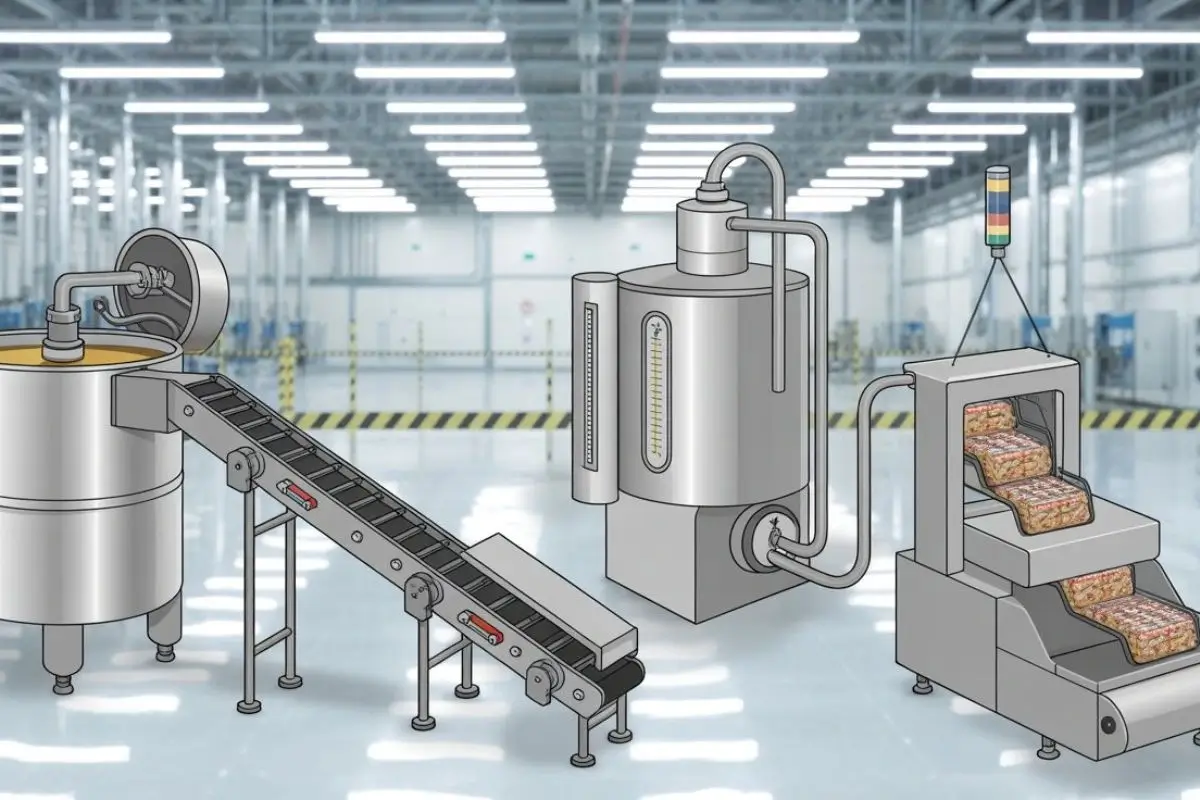
Food processing equipment includes the industrial machines used to wash, cut, mix, cook, concentrate, pasteurize, store, and package food products. The right equipment depends on the food type, production capacity, processing method, and hygiene requirements. This guide covers the 10 main types of food processing equipment used in fruit, vegetable, juice, sauce, and dairy plants, along with tips to choose the right machinery.
10 Types of Food Processing Equipment and Their Uses
Food processing equipment is used in industrial plants to handle each stage of production efficiently while maintaining product quality and hygiene standards. Here are the main types of food processing equipment and their uses.
1. Cleaning and Washing Equipment
Raw material must be cleaned before processing. A fruit and vegetable washer machine removes dirt, debris, and surface contaminants using brushes, spray nozzles, or bubble washing. It is used for fruits like apples, citrus, and tomatoes, and for root vegetables like carrots and potatoes.
2. Peeling, Cutting, and Pulping Machines
These machines prepare raw material to the required size and form. A tomato pulp machine separates pulp from skin and seeds, and is widely used in pulp, puree, sauce, and ketchup production.
3. Mixing and Blending Systems
Blending systems and mixing tanks combine ingredients evenly for juices, sauces, and beverages. Agitators and hygienic design help maintain consistent texture and taste.
4. Cooking Kettles
A steam jacketed kettle heats and cooks products evenly using steam. It is commonly used for jams, chutneys, sauces, and syrups.
5. Evaporators
Evaporators remove water from liquid products under controlled temperature to concentrate them. They are used for tomato paste, fruit concentrates, and milk products.
6. Pasteurizers
A milk pasteurization machine heats liquids like milk, juices, and sauces to a set temperature to reduce harmful microorganisms while maintaining product quality. It supports food safety and shelf life.
7. Retort and Sterilization Systems
A rotary retort machine sterilizes packed food in sealed containers using steam or water under pressure. It is used for ready-to-eat meals, canned foods, and pouch products.
8. Storage Tanks and Vessels
Stainless steel storage tanks hold raw material, intermediate product, and finished liquids hygienically between processing stages.
9. Bottling and Packaging Equipment
Bottling machinery fills, seals, and labels products such as juices and soft drinks, getting them ready for distribution.
10. Conveying and Handling Systems
Conveyors and loaders move product between processing steps. Automated handling reduces manual contact, lowers contamination risk, and improves line efficiency.
How to Choose the Right Food Processing Equipment for Your Plant
Choosing the right food processing equipment is essential for maintaining product quality, improving production efficiency, and meeting the requirements of your manufacturing process. The ideal machinery depends on your raw materials, final product, production capacity, processing method, and plant layout.
Before selecting food processing machinery for your facility, consider the following factors:
1. Type of Food Product and Processing Requirements
Start by identifying the product you want to manufacture and the processing steps it requires. Fruit and vegetable processing, juice production, liquid food processing, and other food manufacturing applications may require different types of machinery. Select equipment that suits your ingredients and the required processing method.
2. Production Capacity
Determine your required production capacity before choosing equipment. Consider your current output requirements and expected future demand. Selecting machinery according to your production volume can help maintain a consistent workflow and reduce unnecessary production bottlenecks.
3. Batch or Continuous Processing
Consider whether your manufacturing process requires batch processing or continuous production. The right option depends on the product, processing time, production volume, and workflow. Your equipment selection should support the way your plant operates.
4. Material of Construction and Hygiene
Food processing equipment should be suitable for the product being handled and the hygiene requirements of the application. Evaluate the material of construction, ease of cleaning, product-contact surfaces, and maintenance requirements before making a decision.
5. Plant Layout and Equipment Integration
Check the available floor space and the arrangement of your existing production line. Equipment should fit into the plant layout and integrate efficiently with connected processing, storage, and packaging operations wherever required.
6. Maintenance, Automation, and Future Expansion
Review the equipment’s maintenance needs, operating requirements, and level of automation. Also consider whether the machinery can support your future production plans. These factors can help you make a more practical long-term investment.
Find the Right Food Processing Machinery for Your Application
Every food manufacturing process has different requirements. Envitro Technomech is a food processing machinery manufacturer in Rajkot, supplying fruit and vegetable processing plants, retort systems, evaporators, kettles, and storage tanks. Share your product, capacity, and process needs with our team, and we will suggest a suitable solution. Contact Us for a Quote
Conclusion
Food processing equipment plays a vital role to transform the food sector. It plays a crucial role in transforming raw ingredients into safe, nutritious, and appealing products. Each type of equipment has a specific function, from preparation and cooking to packaging and quality control.
It ensures food products are produced efficiently, safely, and with consistent quality. As technology continues to develop, food processing equipment will become more sophisticated, enhancing how we produce and consume food worldwide.
FAQs
Q1. What Are the Main Types of Industrial Food Processing Equipment?
The main types of industrial food processing equipment include washing machines, peeling and cutting equipment, mixing and blending machines, thermal processing systems, evaporators, storage tanks, and conveying and packaging equipment. The machinery required depends on the food product, processing method, and production capacity.
Q2. How Do You Choose Food Processing Equipment for a Production Line?
To choose suitable food processing equipment, consider the type of food product, required production capacity, processing method, hygiene requirements, plant layout, maintenance needs, and future production plans. The equipment should match your manufacturing process and work efficiently with other machinery in the production line.
Q3. What Factors Affect the Selection of Food Processing Machinery?
Food processing machinery selection depends on the raw materials, final product specifications, production volume, processing temperature, equipment material, cleaning requirements, available space, and level of automation. Evaluating these factors helps manufacturers identify equipment suitable for their application.
Q4. What Is the Difference Between Batch and Continuous Food Processing Equipment?
Batch processing handles a defined quantity of product during each production cycle, while continuous processing moves product through the process with an ongoing flow. The appropriate method depends on the product, production volume, process requirements, and plant workflow.
Q5. How Does Food Processing Equipment Capacity Affect Production?
Equipment capacity determines how much product can be processed within a specific period or production cycle. Choosing equipment with suitable capacity helps align production stages, reduce bottlenecks, and support consistent output. Capacity requirements should be assessed across the entire production line, not just one machine.
Read Also: Thermal Methods of Food Preservation: Types, Processes, and Applications