
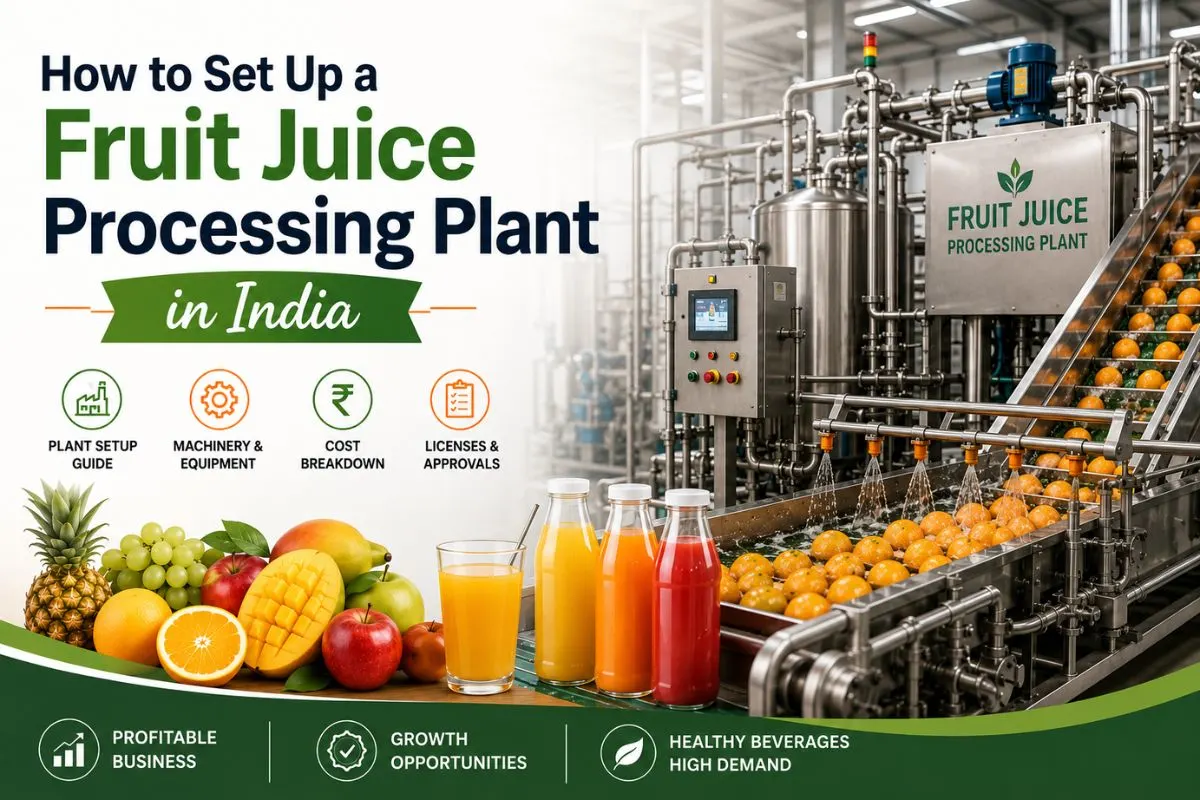
Key Takeaways
- India offers strong growth opportunities for fruit juice manufacturing due to abundant fruit production and rising demand for healthy beverages.
- A complete fruit juice processing plant includes fruit washing, crushing, pulping, juice extraction, pasteurization, filling, and packaging equipment.
- Plant investment typically ranges from ₹5 Lakhs to ₹1.5+ Crores, depending on production capacity, automation level, and packaging requirements.
- Selecting the right location, plant layout, and food processing machinery is essential for efficient production and long-term profitability.
- Quality control, food safety standards, environmental compliance, and regulatory approvals are critical for successful operations.
- Reliable raw material sourcing and advanced processing equipment help maintain consistent product quality and reduce operational costs.
- Partnering with an experienced fruit juice processing plant manufacturer like Envitro Technomech ensures expert guidance from plant design to installation and after-sales support.
Introduction
India is a suitable market for the fruit juice processing industry because it is the largest producer of fruits in the world. Now, consumers are choosing packaged fruit juices, fruit drinks, and natural beverages as healthier options to carbonated drinks. So this demand leads to opportunities for businesses to set up their fruit juice plants.
A fruit juice processing plant works efficiently to convert the fresh fruits into packaged juice products through washing, extraction, filtration, pasteurization, filling, and packaging processes.
You can set up the plant to produce various products like pure fruit juice, juice concentrates, blended juices, nectar, and ready-to-drink beverages. To set up the plant, you must do careful planning, regulatory compliance, proper machinery selection, and adhere to quality control measures. In this blog, we tell you the required machines, juice plant setup cost, and the process.
Common Equipment Required for the Fruit Juice Industry
A juice processing line requires essential machines like the fruit sorter, washer, crusher, pulping machine, juice extractor, sterilizer, concentrator, filler, and more. The manufacturing process is changed based on the type of fruits used. Here are the different types of machines required
1. Fruit Elevator
The fruit elevator moves the fruits from lower to higher positions and links two nearby processes. It is usually placed between the fruit sorter and the washer to perform efficient functions.
2. Fruit Washer
There are two types of fruit washers used, brush spray washing machine and fruit surfing washing machine. It is used to remove the harmful contaminants from the surface of fresh produce. It ensures that the fruit is safe to eat, clean, and has a longer shelf life.
3. Fruit Crusher
Fruit crushers include the squirrel-cage crushers and hammer crushers, and are used to crush fruits and vegetables.
4. Preheat Machine
The preheat machine helps in neutralizing enzymes, softening raw materials, and preserving color.
5. Fruit Pulping Machine
It is used to pulp stone fruits and extract juice or puree from fruits like apricot, mango, kiwi, strawberry, and raspberry.
6. Juice Extractor
This includes belt juice extractors and spiral juice extractors. It is suited for stone fruits like mango, pear, and apple, and offers a high juice yield.
7. Vacuum Concentrator
Vacuum concentrators include falling film and climbing film concentrating pans, as well as external fruit concentration machinery. It is used to quickly evaporate water from juice at low temperatures.
8. Tube-in-tube Pipe Sterilizer
This device uses steam, cold, and hot water as heat transfer agents and is applied to raw materials with moderate to low viscosity. It is used to safely pasteurize or sterilize thick, pulpy juices and preserve their fresh taste and nutritional value.
9. Aseptic Filling Machine
This machine has a sterile room and completes the tasks of canning, opening covers, metering, and sealing. It is used to sterilize both the fruit juice and its packaging separately before combining them in a sterile environment.
Fruit Juice Processing Plant Cost in India
The costs required for the fruit juice processing plant depend on production capacity, automation level, packaging needs, and utility infrastructure. Commercial fruit juice manufacturing plants in India usually cost between ₹5 Lakhs and ₹1.5+ Crores. Here is the cost breakdown
| Plant Scale | Production Capacity | Estimated Cost |
| Small-Scale Plant | Up to 500 LPH | ₹5 Lakhs – ₹15 Lakhs |
| Medium-Scale Plant | 500 – 2,000 LPH | ₹25 Lakhs – ₹60 Lakhs |
| Large/Industrial Plant | 2,000+ LPH | ₹70 Lakhs – ₹1.5+ Crores |
How to Set Up a Fruit Juice Processing Plant?
Here are the steps you can follow to set up the fruit juice processing plant.
1. Detailed Process Flow
The processing flow for the plant involves various steps, material handling, and quality checks. Here are the main stages in the fruit juice processing flow
- Unit Operations Involved
- Raw Material and Mass Balance Requirements
- QA Criteria
- Technical Tests
2. Site Selection
Choosing the right location is important to set up the fruit juice processing plant. Choose the location that gives you easy access to crucial raw materials like fresh fruits, sugar, concentrates, and aseptic packaging. Being close to target markets will help reduce distribution costs.
The site needs strong infrastructure, including reliable transportation, utilities, and waste management systems. Compliance with local zoning laws and environmental regulations must be ensured.
3. Plant Layout Optimization
Consider the plant layout that must improve the workflow safety, efficiency, and reduce material handling. Designate separate areas for raw material storage, production, quality control, and finished goods storage. Allow space for future expansion to support business growth.
4. Equipment Selection
Now buy the quality and corrosion-resistant machinery required for fruit juice production. It is suggested to buy the essential equipment like juice extractors, filtration systems, evaporators, fruit washers, crushers, pulpers, pasteurizers, homogenizers, and filling and packaging machines. You should only buy the machinery that meets industry standards for efficiency, safety, and reliability.
5. Raw Material Sourcing
source the materials from a reliable fruit juice plant manufacturer in India, like fresh fruits, sugar, concentrates, and aseptic packaging, and ensure consistent production quality.
Buying from the nearby suppliers is recommended to save transportation costs. While buying, make sure to check the sustainability and supply chain risks, and negotiate long-term contracts to stabilize pricing and ensure a steady supply.
6. Safety and Environmental Compliance
Implementing safety protocols is important to set up the fruit juice processing. It is suggested to install advanced monitoring systems to detect leaks or process deviations. Effluent treatment systems are necessary to reduce environmental impact and meet emission standards.
7. Quality Assurance Systems
You should set up the quality control systems throughout the production. Use analytical instruments to monitor product concentration, purity, and stability. Maintain documentation for traceability and regulatory compliance.
Why Choose Envitro Technomech?
Envitro Technomech stands out as the leading fruit juice plant manufacturer India and provides you with scalable, practical, and reliable solutions. We provide full support, from plant design and machinery selection to installation and after-sales service. You can also get support from our team to understand the fruit juice processing plants’ costs and make an investment wisely.
Keep in mind that the juice plant setup cost varies based on capacity, automation, machinery quality, and operational planning. Although costs can differ significantly, working with the right supplier makes the difference in your business.
Get in touch with us to discuss your production requirements and get customized, efficient, and future-ready solutions that help businesses turn their juice processing ideas into profitable realities, with confidence and clarity every step of the way.
Conclusion
Setting up the fruit juice processing plant requires careful planning, machinery, licenses, regulatory approvals, and effective marketing. Moreover, make sure to understand your production requirements, choose the right location, and install the advanced processing equipment to get long-term success for the business.
With India’s abundant fruit production, increasing demand for healthy drinks, and a growing food processing sector, fruit juice manufacturing offers a promising opportunity for entrepreneurs and investors.
A well-designed plant with efficient operations, strong quality control, and a customer-focused product lineup can create a sustainable and profitable business in the expanding beverage market.
Also Read: Tomato Ketchup and Sauce Plant: Process, Machines, and Cost
FAQs
Q1. What Fruits Does the Fruit Juice Processing Plant Process?
Ans: This plant processes various fruits like apples, oranges, mangoes, guavas, pineapples, grapes, seasonal fruits, and pomegranates. It processed the plants on the basis of your production requirements and machine configuration.
Q2. Is Pasteurization Necessary in Fruit Juice Manufacturing?
Ans: Yes, pasteurization is important because it destroys the harmful microorganisms, improves food safety, and extends the shelf life. It also maintains the product quality and ensures that the juice remains suitable for storage and distribution.
Q3. How Much Space is Required for a Fruit Juice Processing Plant?
Ans: It depends on your machinery layout, production capacity, storage facilities, packaging operations, utilities, and future expansion plan.
Q4. What Factors Affect the Fruit Juice Plant Costs?
Ans: The factors that affect the fruit juice plant costs are the production capacity, automation level, packaging systems, machinery quality, utility requirements, building infrastructure, lab facilities, and compliance with food safety regulations.
Q5. Can a Fruit Juice Plant Manufacture Multiple Juice Varieties?
Ans: Yes, it produces different fruit juices and blends them well by using the same production lines. These machines also ensure the proper cleaning, recipe management, and quality controls.