
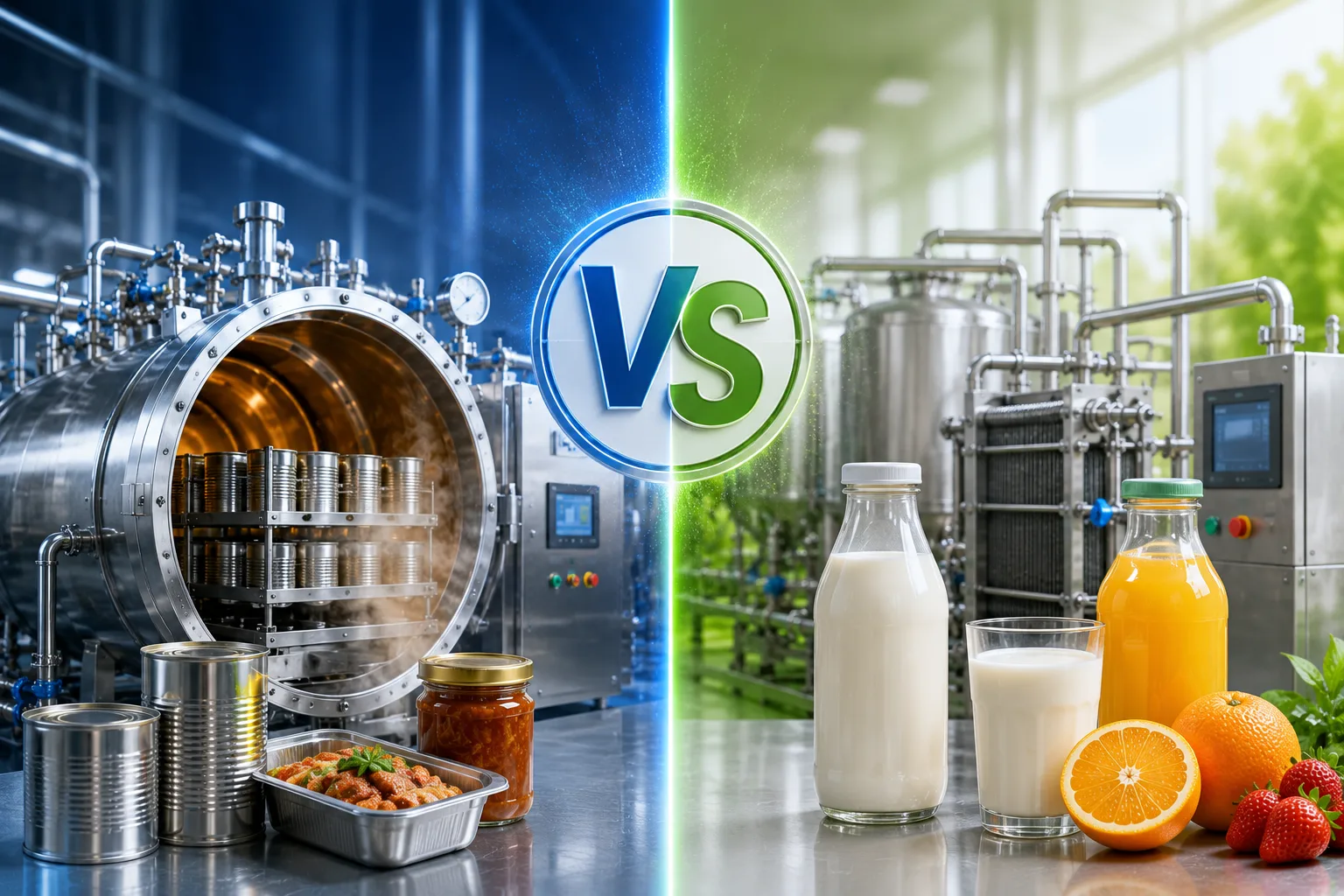
The food and beverage industry relies a lot on processing technologies. Two key methods are sterilization and pasteurization. These techniques make food safer, longer and stay good quality. Many manufacturers get sterilization and pasteurization mixed up when choosing industrial machines.
In India food processing is growing fast. The India Brand Equity Foundation says the Indian food processing industry will be worth USD 700 billion by 2030. This growth means there’s a need for reliable food processing equipment and automated systems.
For manufacturers, knowing the difference between sterilization and pasteurization helps them work efficiently, reduce contamination risks and follow food safety rules. Companies like Envitro Tech Systems offer machines for modern food and dairy processing.
What Is Sterilization?
Sterilization is a process that uses temperatures to kill all the tiny living things like bacteria and viruses. This way the things that are sterilized can stay good for a time without needing to be kept cold.
Industrial sterilization uses hot temperatures, usually more than 121 degrees Celsius. There are machines, like retorts and autoclaves and UHT systems that do the sterilization.
Key Benefits of Sterilization
- Extends product shelf life significantly
- Reduces spoilage during transportation
- Supports export-quality food production
- Minimizes microbial contamination risks
- Improves long-term storage efficiency
Sterilization is widely used in:
- Dairy processing
- Ready-to-eat meals
- Pharmaceutical manufacturing
- Beverage processing
- Canned food industries
Modern food processing machine manufacturers now integrate automation into sterilization systems. Automated controls improve precision and reduce operational errors.
Explore industrial sterilization solutions for better production reliability.
What Is Pasteurization?
Pasteurization is a process that uses heat. This heat gets rid of the bacteria in food and drink. It also makes sure that the food and drink still taste good, feel right and have the nutrients that our bodies need.
Unlike when we sterilize something, pasteurization does not kill every single tiny living thing. The heat used in pasteurization is usually between 63 degrees Celsius and 85 degrees Celsius.
We see pasteurization a lot in the milk, juice and beverage industries in India. The milk industry uses pasteurization, the juice industry uses pasteurization and the beverage industry uses pasteurization to keep their products safe for people to drink.
Benefits of Pasteurization
- Maintains product freshness
- Preserves nutrients and flavor
- Reduces harmful bacteria
- Supports daily dairy production
- Improves food safety compliance
According to the Food Safety and Standards Authority of India (FSSAI), pasteurization remains essential for safe dairy distribution nationwide.
Sterilization vs Pasteurization: Main Differences
Understanding the sterilization vs pasteurization difference helps manufacturers choose suitable processing systems for their products.
| Factor | Sterilization | Pasteurization |
| Temperature | Above 121°C | 63°C–72°C |
| Microbial Removal | Destroys all microorganisms | Removes harmful bacteria only |
| Shelf Life | Very long | Moderate |
| Nutritional Impact | Slight nutrient loss | Better nutrient retention |
| Equipment Used | Autoclaves, sterilizers | Pasteurizers |
| Industry Usage | Pharma, canned foods | Dairy, beverages |
The discussion around sterilization vs pasteurization becomes important when balancing shelf life and product quality.
Food manufacturers in India often choose pasteurization for fresh dairy products. Sterilization suits export-oriented and packaged food industries.
Explore suitable machinery based on your production goals.
Why Machine Manufacturing Matters in Food Processing
Advanced processing machines directly impact food safety and production efficiency. Modern equipment manufacturers now design systems that combine automation, energy savings, and precision control.
Companies like Envitro Tech Systems provide customized food processing machinery for Indian industries.
Modern Machine Features
- Automated temperature control
- Stainless steel hygienic design
- Energy-efficient operations
- Digital monitoring systems
- CIP cleaning integration
- Reduced maintenance downtime
These features improve productivity while reducing contamination risks.
The people at Grand View Research made a report in 2025. This report says that the global food processing equipment market is still getting bigger. The reason for this is that people want automation and they want the food to be safer. So the global food processing equipment market keeps growing because of these things.
Applications in Indian Industries
The debate around sterilization vs pasteurization is highly relevant for Indian manufacturing sectors.
- Dairy Industry
- Pasteurization dominates milk processing because it preserves flavor and nutrients.
- Sterilization is often used for tetra-pack milk and long-storage dairy products.
- Beverage Industry
- Juice manufacturers prefer pasteurization for freshness and taste consistency.
- Energy drinks and shelf-stable beverages may require sterilization systems.
- Pharmaceutical Industry
- Sterilization is critical in medicine production. It ensures complete elimination of harmful microorganisms.
- Ready-to-Eat Food Industry
- Packaged food manufacturers use sterilization for extended shelf life and export compliance.
- Understanding the sterilization and pasteurization difference helps businesses select the right investment.
How Automation Improves Processing Efficiency
Automation plays a major role in modern food machine manufacturing. Smart systems improve consistency and reduce human errors.
Benefits of Automated Machines
- Faster production cycles
- Lower labor costs
- Improved hygiene standards
- Consistent product quality
- Better temperature accuracy
- Reduced energy consumption
Industrial automation also helps manufacturers meet FSSAI and international safety requirements.
This is why many Indian businesses now upgrade traditional systems with automated processing equipment.
Explore automation to increase operational efficiency.
Choosing Between Sterilization and Pasteurization
Selecting the correct method depends on product type, storage goals, and customer demand.
Choose sterilization when:
- Long shelf life is required
- Export packaging is needed
- Refrigeration availability is limited
Choose pasteurization when:
- Fresh taste matters most
- Nutritional value must remain high
- Products have short consumption cycles
The right Fruit Juice Machine Manufacturers can guide businesses toward efficient processing systems.
Understanding sterilization vs pasteurization supports better production planning and profitability.
Also Read: What Is Food Industry Automation? Benefits of Modern Processing Machines
FAQs
Q1. Which Is Better, Sterilization or Pasteurization?
Ans: It really depends on the kind of product you have and how you need to store it. Sterilization helps the product longer and it kills more of the bad microbes. On the other hand pasteurization is better at keeping the flavor and nutrients of the product. The industries that make packaged food often prefer sterilization.
Q2. What Is the Main Sterilization and Pasteurization Difference?
Ans: The sterilization and pasteurization difference is that pasteurization uses temperatures to destroy only the bad bacteria.The main sterilization and pasteurization difference is the temperature and how it kills living things.
Q3. Why Are Processing Machines Important in Food Manufacturing?
Ans: Processing machines improve food safety, efficiency, and production consistency. Automated systems reduce contamination risks and labor dependency. Modern equipment also improves temperature accuracy and energy efficiency. Reliable machine manufacturers help Indian businesses meet FSSAI and export standards while increasing production capacity.
Q4. Which Industries Use Sterilization and Pasteurization Machines?
Ans: The Industry includes the dairy industry, the beverage industry, the pharmaceutical industry, the ready-to-eat food industry and the canned product manufacturing industry. Companies that sell machinery, such as Envitro Tech Systems have systems for different manufacturing applications that use Sterilization and Pasteurization Machines.
Q5. How Does Automation Help Food Processing Businesses?
Ans: It makes things happen faster and more consistently.Food processing businesses that use automation can meet the standards that people have for food safety. Automation is very important for food processing businesses. Automation also helps with the machinery. It makes it so the machinery does not need to be fixed often. It uses less energy.