
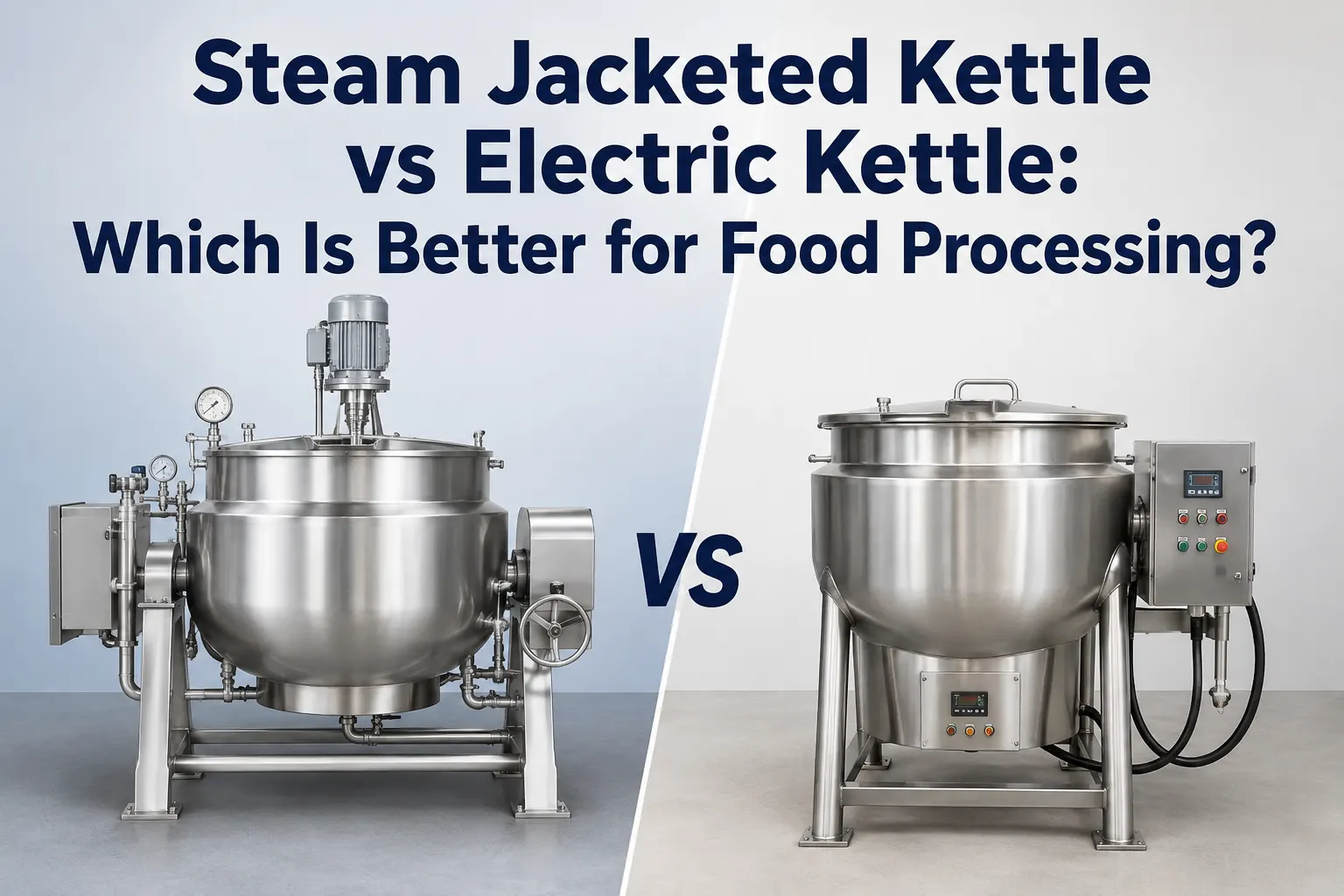
Though both an electric kettle and a steam jacketed kettle can provide precise heating for food processing, the type of heat source, requirements, and the environment to which they are applied can differ.
Selecting between them however needs few specific considerations such as the type of product, volume, batch size, heat requirements and even the infrastructure.
Manufacturers comparing steam jacketed kettle vs electric kettle should consider these factors to pick the right kettle for the right product and maintain production efficiency and product quality.
About Steam Jacketed Kettle
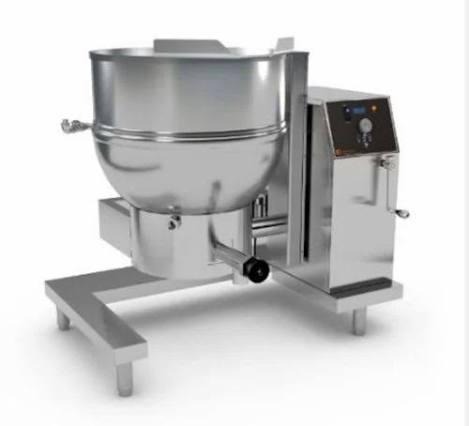
A vessel with dual walls that provides even indirect heating is referred to as a steam jacketed kettle. Steam circulates through the jacket surrounding the vessel, transferring heat through the vessel wall to the product inside.
Various models offer different additional features such as tilting capabilities, temperature control, and stirrers. They are mainly used to process a variety of products including sauces, gravies, syrups, chutneys, jams, soups, broth, and even dairy products.
Need controlled batch heating? Explore the range of kettles on offer at Envitro Technomech.
What is an Electric Kettle?
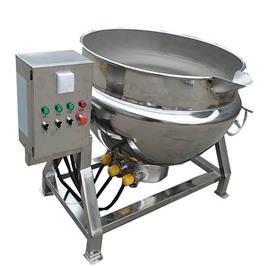
Electric kettles use electricity as an energy source for food batch heating. In many cases, electric heating elements can directly heat the vessel or intermediate substance. Such heating can be suitable in places without an existing requirement or availability of steam infrastructure.
Additionally, temperature control of the kettle’s contents can be easily achieved with this type of indirect heating for specific target applications. Selection of the right type of electric kettle depends on a stable power source, process type and projected production volume.
The Main Differences
Mainly, the comparison of steam jacketed kettle vs electric kettle depends upon their heat source and transfer mechanisms.
Factor Steam Jacketed Kettle Electric Kettle
Heat source Steam Electricity
Heat transfer Indirect through vessel wall Depends on heating design
Steam infrastructure Required Not required
Temperature control Controlled steam conditions Controlled electrical heating
Product handling Liquids and semi-liquids Compatible products
Advantages of a Steam Jacketed Kettle
- Even indirect heating
- Lesser scorching risk
- Can suit larger batch processing
- Can process many viscous products
- Customisable to suit needs
Benefits of an Electric Kettle
- Do not require a central steam system
- Easy to install
- Straightforward to control temperatures
- Useful in smaller facilities
However, electric kettle systems can consume a considerable amount of electricity. It is vital to ensure appropriate load management before installation.
Which is More Energy Efficient?
There is no definite answer to it. It always depends on the complete plant in relation to an application’s requirements and limitations. Generally, a steam kettle is preferable to an electric kettle for installations with an existing high-efficiency boiler system supplying the steam requirements of multiple interconnected equipment pieces.
In contrast, an electric system may prove efficient if there are no losses in a plant while transferring the steam generated by a boiler to various parts of the installation. However, electricity tariffs and utilisation hours also need reviewing.
Therefore, manufacturers must compare the energy consumption of their complete setup and consider the following:
- Energy source and tariff
- Boiler efficiencies
- Losses in steam distribution lines
- Target temperatures for heating
- Size of target batch
- Time needed per batch
- Heat recovery methods
- Operating frequencies
Specifications to Consider
- Capacity
- Material
- Stirring mechanism
- Temperature range
- Insulation option
- Discharge mechanism
What is Better for Food Processing?
The preference between a steam jacketed kettle vs electric kettle largely depends upon an existing manufacturing environment.
A steam-jacketed kettle is likely to be preferable to a manufacturer with:
- An existing steam system at their facility
- More than one steam-dependent equipment piece
- Higher volume production needs
- A requirement of indirect heat
- A need for consistent batch heating
In contrast, an electric kettle is likely to be preferable to manufacturers if:
- They lack a central steam generation system.
- Medium-volume production needs.
- A requirement exists for self-sufficient and self-contained production units.
- Simpler-installation needs.
- Existing electrical capacity is adequate.
In both cases however, product viscosity, batch sizes, target temps and agitation capacity must be taken into account during specification.
Conclusion
When comparing steam jacketed kettle vs electric kettle, it is important to be guided more by the requirements set by a process rather than a single factor. Steam systems can be better for larger plants with existing steam infrastructure and utilising multiple steam-based processes.
Electric can be a practical choice where such infrastructure is not present. For broader food processing requirements, food processing machinery manufacturers can help businesses select suitable equipment based on their production needs.
Also Read: Steam Jacketed Kettle Advantages for Industrial Food Processing
FAQs
Q1. Can a Steam Jacketed Kettle Suit My Viscous Formulation?
Ans: Yes. Choosing the right agitator and vessel configuration will play a vital role in this aspect of process design.
Q2. What Factors Should I Compare Before Choosing?
Ans: Consider characteristics of the product being heated, size of target batch, required temperature, available utilities and production volumes needed.
Q3. Is a Steam Jacketed Kettle Better Than an Electric Kettle?
Ans: It depends on production volume, heating requirements, available utilities and whether a steam system is already installed.
Q4. What is the Main Difference Between Steam and Electric Kettles?
Ans: A steam jacketed kettle uses steam for indirect heating, while an electric kettle uses electrical heating elements to generate heat.
Q5. Which Kettle is Better for Large-scale Food Processing?
Ans: Steam jacketed kettles are often suitable for larger-scale production, particularly where steam infrastructure is already available.