
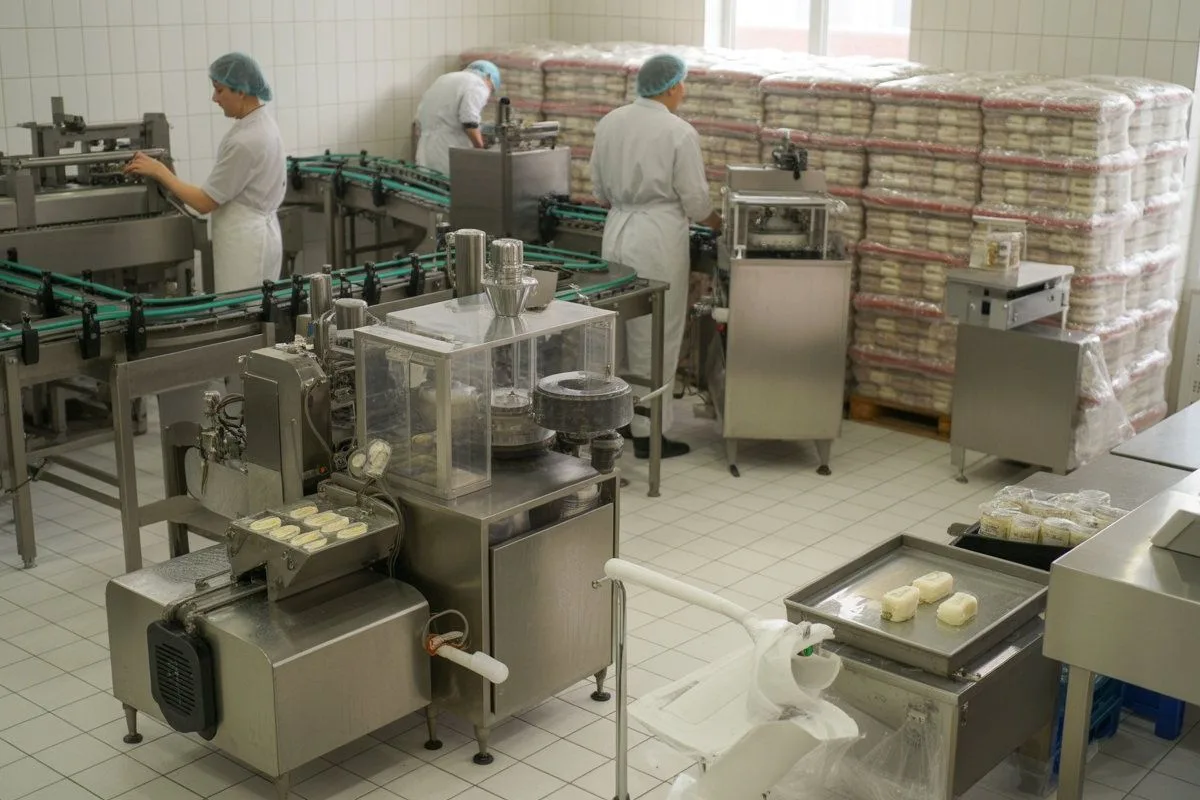
Key Takeaways
- Selecting the right food processing and packaging machinery directly impacts product quality, production efficiency, and long-term profitability.
- Always evaluate product type, packaging requirements, and production capacity before investing in equipment.
- Choose machinery manufactured from food-grade stainless steel (SS 304 / SS 316) to ensure hygiene and regulatory compliance.
- Verify compliance with standards such as HACCP, ISO, CE, and FDA for safe food manufacturing operations.
- Consider automation level (manual, semi-automatic, or fully automatic) based on output goals and labor efficiency.
- Assess total cost of ownership, including energy consumption, maintenance, spare parts, and machine lifespan.
- Ensure the equipment fits your plant layout and supports smooth material flow.
- Prefer a reliable food processing machinery manufacturer that offers customization, installation support, and strong after-sales service.
Selecting the right food processing and packaging machinery directly impacts production efficiency, product quality, food safety compliance, and long-term profitability. With a wide range of industrial equipment available, businesses must evaluate operational requirements, manufacturing volumes, and future scalability before investing. This guide outlines the key factors to consider when choosing machinery for your plant.
About Food Processing Machinery
Food processing machinery refers to industrial-grade equipment designed to convert raw materials into safe and consumable food products through controlled mechanical and thermal processes. These systems support critical manufacturing stages such as preparation, cutting, mixing, cooking, filling, sealing, packaging, and preservation.
Common equipment includes grinders, mixers, juicers, fillers, sealers, blenders, and automated packaging systems. Leading food processing machinery manufacturers design these systems to enhance efficiency, maintain product consistency, reduce labor dependency, and ensure hygiene compliance across food production facilities.
How to Choose the Right Food Processing and Packaging Machine
While buying the right food processing & packaging machinery, you should keep the following considerations in mind
1. Understand Production Requirements
Before investing in food processing equipment, businesses must clearly define their production requirements. Key considerations include:
- Type of food products (snacks, beverages, dairy, bakery, etc.)
- Target production output
- Batch-based or continuous manufacturing
- Future expansion plans
Understanding these parameters helps shortlist machinery that aligns with operational goals and long-term scalability.
2. Type of Food Products
Different foods require different packaging, so you should use the right packaging machine accordingly. For example,
- Fresh fruits require breathable films.
- Dry snacks require airtight sealing.
- Frozen foods require robust vacuum packing
3. Production Capacity
Production capacity plays a critical role in machinery selection. Small-scale units may operate efficiently with manual or semi-automatic systems, whereas large manufacturing plants require high-speed automatic food packaging machines to support mass production while maintaining precision and consistency.
4. Machine Performance
Check the packaging efficiency and speed of the machine to ensure that it meets the manufacturing standard and needs. You should also check if the machine has stable performance and high precision, and reduce packaging waste and errors.
5. Hygiene and Safety Standards
Choosing the right food processing machinery suppliers is important to ensure that they adhere to the hygiene and safety standards. It ensures that your machine complies with the HACCP, ISO, CE, and FDA standards.
Machinery must comply with recognized food safety standards such as HACCP, ISO, CE, and FDA regulations. Reputable manufacturers design equipment using food-grade stainless steel (SS 304 / SS 316) with smooth surfaces, sanitary welding, and built-in safety mechanisms to prevent contamination and ensure safe production.
6. Assess Energy Efficiency and Operating Costs
Machinery selection should extend beyond initial purchase cost. Total cost of ownership—including energy consumption, maintenance frequency, spare part availability, and equipment lifespan—directly affects long-term profitability. Energy-efficient systems reduce operational expenses while supporting sustainable manufacturing practices.
- Power consumption and energy-saving features
- Maintenance frequency and ease of servicing
- Cost and availability of spare parts
- Machine lifespan
Energy-efficient machines lower operational costs and support sustainable manufacturing practices.
7. Plant Layout and Space Availability
Your plant layout affects the type and size of machinery you can use. Poor layout planning can cause workflow inefficiencies and safety problems. To buy the right machinery, you should take the following steps.
- Measure available floor space and ceiling height
- Make the material flow plan from raw material selection to final products
- Ensure enough space for maintenance and cleaning
- Check if it is compatible with your existing infrastructure
Compact and integrated machinery solutions work best for plants with limited space.
8. Cost
Cost is an important factor to consider to buy the reliable food processing & packaging machinery. It is suggested to buy the affordable Fruit Washer Machine, but without compromise to quality. so you should consider the Total cost of ownership, Downtime and maintenance cost, Spare part availability, Warranty period, Energy consumption, Expected production life to get an idea of how much you need to spend on it, and plan accordingly.
Don’t buy too many expensive machines without assurance about their functions, features and maintenance needs. And also don’t buy the cheap machines that do not yield quality outcomes and interrupt your industrial operations.
9. Check Customization Capabilities
Every food processing facility operates with unique product specifications and workflow requirements. Machinery manufacturers offering customization capabilities can provide adjustable speeds, multi-product compatibility, ERP integration, and specialized hygiene features to improve operational efficiency.
10. After-Sales Support & Maintenance
Choose reliable food processing machinery suppliers that provide training, maintenance, and spare parts. It saves your time and money.
How Envitro Technomech Helps You Choose the Right Solution
Selecting the right food processing solution requires technical expertise and industry experience. At Envitro Technomech, we work closely with clients—from initial consultation to final installation—to deliver tailored equipment and complete processing lines based on product type, production capacity, and plant layout.
As a trusted food processing machinery manufacturer, we also provide installation support, training, preventive maintenance, and spare part assistance to ensure uninterrupted operations and minimal downtime.
Conclusion
Choosing the right food processing and packaging machinery requires evaluating functionality, compliance standards, production capacity, plant layout, and long-term operational costs. Investing in equipment manufactured with food-grade materials and supported by reliable after-sales service ensures consistent quality and sustainable growth.
Whether establishing a new unit or expanding existing operations, partnering with an experienced machinery manufacturer builds a strong foundation for efficient and scalable food production.
Also Read: Rotary Retort vs Vertical Autoclave: Which is Better for Your Food Processing Plant?
FAQs
Q1. What to Consider to Buy the Right Food Processing and Packaging Machine?
Ans: While buying the right machinery, you should consider your food packaging material compatibility, type of food product, production capacity, automation level, machine reliability and industry compliance. By assessing these elements, you can buy the right machine that aligns to your manufacturing needs and maintains product quality.
Q2. What is a Common Mistake to Avoid While Buying a Food Processing Machine?
Ans: The common mistake to avoid while buying these machines is not understanding your production capacity, forgetting industrial space and utility requirements. Always buy the equipment on the basis of your current and evolving production capabilities.
Q3. How to Verify if the Machine is Food Safe?
Ans: To buy the food-safe processing machinery, you should look at stainless steel construction, NSF certification and compliance standards.
Q4. Can Food Packaging Equipment Handle Different Product Types?
Ans: Yes, the modern food packaging machines can handle multiple product types and allow fast changeovers in your industrial units.
Q5. What if the Machine Breaks Down?
Ans: If the machine breaks down and interrupts your food business operations, then you can contact the manufacturer immediately. It reflects the need to spare critical parts, reduce downtime, and ensure seamless operations.